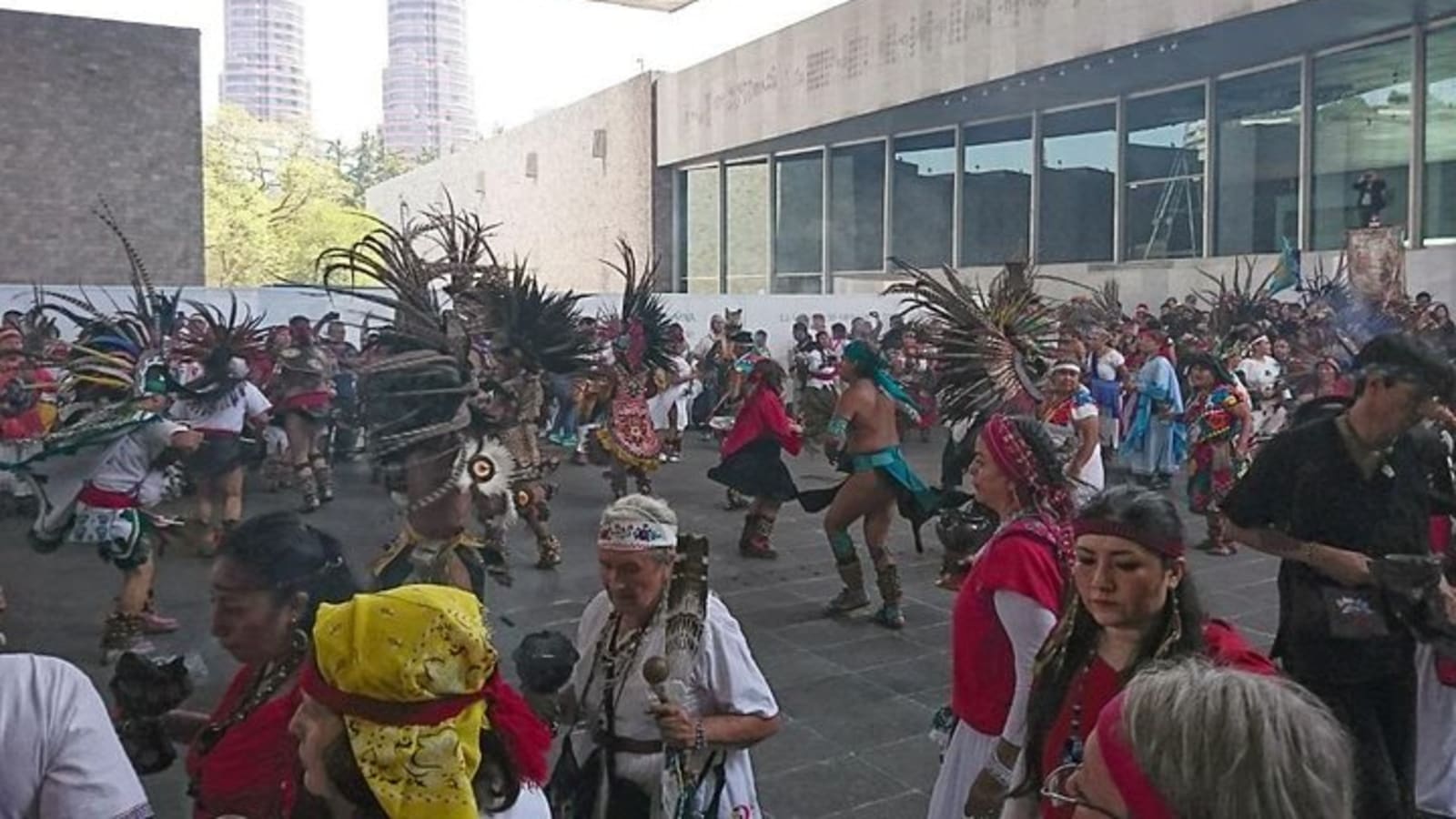
Private Tour Museum of Anthropology and Chapultepec Castle.


About This Tour
Discover two of Mexico City’s most iconic cultural landmarks on this private 6-hour experience. Visit Chapultepec Castle, the only colonial castle in Latin Amer...
Duration: 6 Hours · Tour type: Private · Activity level: Moderate · Accommodation: Not included · Transport: Included · Wheelchair access: No · City: Mexico City · Languages: English, Spanish
Know before you go: WHEELCHAIR ACCESSIBLE; STROLLER OR PRAM ACCESSIBLE; INFANTS MUST SIT ON LAPS; INFANT SEATS AVAILABLE; Not suitable for pets; No public transportation nearby; Wheelchair accessible; Not wheelchair accessible; Pickup and Drop-off in the lobby of your Hotel or Airbnb
About Mexico City

Mexico City
Don’t miss this pulsating cityscape of the famous Zocalo, one majestic Spanish-style historic core, salsa clubs and sprawling barrios. Get a local guide to reveal the metropolis’ hidden secrets and local spots.
What's Included
- Private transportation
- Air-conditioned vehicle
- Water bottles
- Museum tickets
- Bilingual guide
Not Included
- Lunch
- Tips
Itinerary
-
1Day 01
Castle Chapultepec The Castillo de Chapultepec is a building located in the first section of the Chapultepec forest in Mexico City. Its origin dates back to the Viceroyalty of New Spain, when the viceroys used to frequent Chapultepec as a rest and recreation area. Bernardo de Gálvez ordered the start of its construction on August 16, 1785, in whose design Francisco Bambitelli and Manuel Agustín Mascaró participated.7 However, it was abandoned for a couple of decades until its acquisition by the City of Mexico in 1806 Until then, the palatial work was surrounded by wide foundation walls built of andesite. At the beginning of the 1840s the Heroic Military College established its headquarters in the castle, during which time the "Caballero Alto" keep was built . It had a significant role during the Battle of Chapultepec as part of the US intervention in Mexico in 1847, as it was "the last bastion of national defense," during which it suffered considerable damage to its structure. Miguel Miramón used it for the first time as a presidential residence in the late 1850s, until the second French intervention in Mexico. During the imperial transition, Maximiliano de Habsburgo and his wife Carlota inhabited the building "captivated by the beautiful views of the Valley of Mexico that could be appreciated from the place ”, and carried out a series of adjustments inspired by the Parisian rundbogenstil and neoclassical style, which gave it a symmetry similar to that of the European bourgeois precincts of that time. The National Museum of Anthropology The National Museum of Anthropology is important because it houses the most important archaeological and ethnographic collections in the country, and also this museum has a unique design and planning in the history of modern architecture in Mexico The creator of the project, the architect Pedro Ramírez Vázquez, conceived that this building was not a simple repository since this museum is also part of our cultural heritage due to its beauty in terms of its architectural design, as well as its relevance and wisdom with the which were planned their exhibition spaces. In addition, the National Museum of Anthropology was inaugurated on September 17, 1964 by President Adolfo López Mateos. The museographic design of the National Museum of Anthropology had a national and global impact because one of the characteristics is that the rooms had different heights in the ceilings: three and a half meters in the background section, and six meters in the areas where they are exhibited. great cultural achievements. For example, the Sala Mexica always maintains the height of six meters, as a way of exalting the great achievements of this culture. Also, it should be mentioned that the National Museum of Anthropology has 24 exhibition rooms, of which 22 are permanent and two rooms for temporary exhibitions.is important because it houses the most important archaeological and ethnographic collections in the country, and also this museum has a unique design and planning in the history of modern architecture in Mexico The creator of the project, the architect Pedro Ramírez Vázquez, conceived that this building was not a simple repository since this museum is also part of our cultural heritage due to its beauty in terms of its architectural design, as well as its relevance and wisdom with the which were planned their exhibition spaces. In addition, the National Museum of Anthropology was inaugurated on September 17, 1964 by President Adolfo López Mateos. The museographic design of the National Museum of Anthropology had a national and global impact because one of the characteristics is that the rooms had different heights in the ceilings: three and a half meters in the background section, and six meters in the areas where they are exhibited. great cultural achievements. For example, the Sala Mexica always maintains the height of six meters, as a way of exalting the great achievements of this culture. Also, it should be mentioned that the National Museum of Anthropology has 24 exhibition rooms, of which 22 are permanent and two rooms for temporary exhibitions.
Meeting Point
Meeting point: Pickup service provided in Mexico City. · Tour start: Pickup service provided in Mexico City. — Tour ends at the same location as the start point.


