22-Day Everest Base Camp Trek and Island Peak Climb in Nepal
About This Tour
Take on an epic 22-day Himalayan journey that combines the classic Everest Base Camp trek with the exhilarating climb of Island Peak (Imja Tse, 6,160m). Fly int...
Duration: 22 Days · Tour type: Shared · Activity level: Hard · Accommodation: Included · Budget · Transport: Included · Wheelchair access: Not applicable · Cities: Kathmandu, Everest Base Camp-South, Lukla, Dingboche, Namche Bazaar, Tengboche, Phakding, Thame, Island Peak, Lobuche, Kala Patthar, Gorakshep, Chukhung, Khumjung · Languages: English
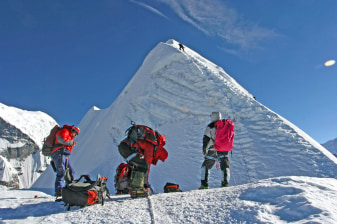
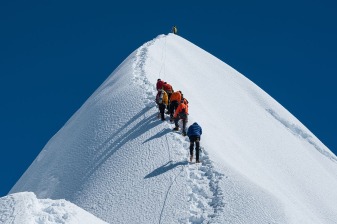
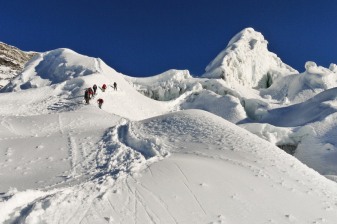
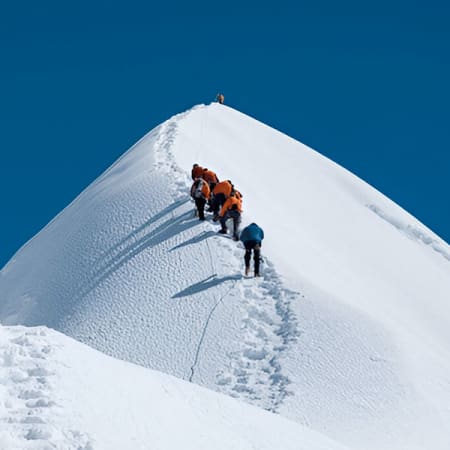
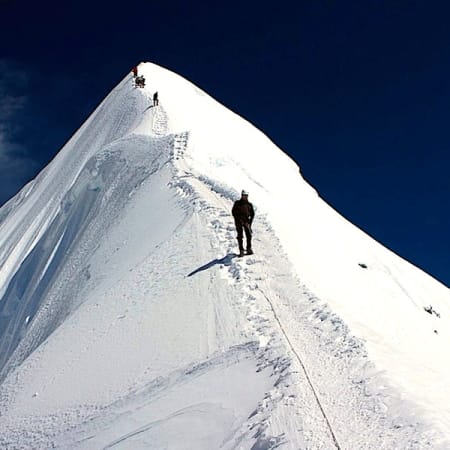
Know before you go: Climbing Island Peak (6,160 meters / 20,210 feet) is an incredible adventure, but it is not just a walk in the park. It is a real mountain climb that requires serious preparation.It is a real technical climb, not a trek. Many people think Island Peak is just a hard hike because it is called a "trekking peak." It is not a trek.The hardest part is a steep, 100-meter (328 feet) wall of ice and snow. You will climb up a 40 to 50-degree slope.Safety lines: you must know how to use a Jumar (an ascender tool to pull yourself up a rope) and a figure-eight descender to rappel (slide down the rope) safely.Crampons and axes: you will walk across a glacier wearing heavy plastic mountaineering boots, crampons (spikes on your boots), and holding an ice axe.High altitude: Island Peak sits over 6,000 meters high.The air has less than half the oxygen compared to sea level.Acclimatization is key: your 22-day schedule must include slow walking days to let your body get used to the thin air. Skipping days to go faster will make you sick.Altitude sickness (AMS): you need to know the signs of altitude sickness, like bad headaches, dizziness, or vomiting.If these get bad, you must descend immediately.Ultimate physical fitness is required. You will be hiking for weeks before you even reach the peak.The actual summit day is exhausting. Summit day: you will wake up around 12:00 AM or 1:00 AM and climb for 10 to 14 hours straight in freezing cold temperatures.Training: months before your trip, you should practice walking uphill with a heavy backpack, running, and doing leg exercises like squats.Essential gear: rent or buy? You need special gear that you do not use on normal hikes. You can buy this gear at home, or rent it very cheaply in Kathmandu or the village of Chhukung right before the climb.The Big Five: you will need mountaineering boots, a climbing harness, an ice axe, crampons, and a helmet.Layers: temperatures near the top can drop to -15°C (5°F) or colder.High-quality thermal underwear, a thick down jacket, and heavy gloves are mandatory.Autumn vs. spring weather: while both are peak seasons, they offer different conditions.Spring (March-May): the weather is warmer, but there is more snow on the mountain. This can make the climb softer but sometimes more tiring.Autumn (Sept-Nov): the air is incredibly clear, but it is much colder and the mountain can have more hard, exposed ice.Insurance must cover helicopter evacuation.Normal travel insurance will not protect you on Island Peak.The 6,000-meter rule: your insurance policy must specifically say it covers medical care and helicopter rescue up to 6,000 meters.If you get severely sick or hurt, a helicopter is the only way out of the mountains, and it costs thousands of dollars if you do not have insurance.; It is a real technical climb, not a trek. Many people think Island Peak is just a hard hike because it is called a "trekking peak." It is not a trek.; The hardest part is a steep, 100-meter (328 feet) wall of ice and snow. You will climb up a 40 to 50-degree slope.; Safety lines: you must know how to use a Jumar (an ascender tool to pull yourself up a rope) and a figure-eight descender to rappel (slide down the rope) safely.; Crampons and axes: you will walk across a glacier wearing heavy plastic mountaineering boots, crampons (spikes on your boots), and holding an ice axe.; High altitude: Island Peak sits over 6,000 meters high.; The air has less than half the oxygen compared to sea level.; Acclimatization is key: your 22-day schedule must include slow walking days to let your body get used to the thin air. Skipping days to go faster will make you sick.; Altitude sickness (AMS): you need to know the signs of altitude sickness, like bad headaches, dizziness, or vomiting.; If these get bad, you must descend immediately.; Ultimate physical fitness is required. You will be hiking for weeks before you even reach the peak.; The actual summit day is exhausting. Summit day: you will wake up around 12:00 AM or 1:00 AM and climb for 10 to 14 hours straight in freezing cold temperatures.; Training: months before your trip, you should practice walking uphill with a heavy backpack, running, and doing leg exercises like squats.; Essential gear: rent or buy? You need special gear that you do not use on normal hikes. You can buy this gear at home, or rent it very cheaply in Kathmandu or the village of Chhukung right before the climb.; The Big Five: you will need mountaineering boots, a climbing harness, an ice axe, crampons, and a helmet.; Layers: temperatures near the top can drop to -15°C (5°F) or colder.; High-quality thermal underwear, a thick down jacket, and heavy gloves are mandatory.; Autumn vs. spring weather: while both are peak seasons, they offer different conditions.; Spring (March-May): the weather is warmer, but there is more snow on the mountain. This can make the climb softer but sometimes more tiring.; Autumn (Sept-Nov): the air is incredibly clear, but it is much colder and the mountain can have more hard, exposed ice.; Insurance must cover helicopter evacuation.; Normal travel insurance will not protect you on Island Peak.; The 6,000-meter rule: your insurance policy must specifically say it covers medical care and helicopter rescue up to 6,000 meters.; If you get severely sick or hurt, a helicopter is the only way out of the mountains, and it costs thousands of dollars if you do not have insurance.
About Island Peak

Island Peak
Explore the list of top ranked local tour guides in Island Peak. Get tour activities offered by tour companies and independent travel guides in Island Peak.
What's Included
- A standard 22-day package covers almost all logistical, legal, and survival needs from the moment you land until you depart.
- Permits and government fees: NMA Island Peak Climbing Permit is included. Note: the government royalty fee is $250 to $350 USD in spring and $125 to $175 USD in autumn.
- Sagarmatha National Park Entry Fee covers your passage through protected conservation areas (~$30 USD).
- Khumbu Pasang Lhamu Rural Municipality Fee is the local community tax that replaces the old TIMS card (30 USD).
- Garbage Deposit Fee is the refundable waste-management deposit managed directly by your agency.
- Flights and transportation: domestic round-trip airfare between Kathmandu (or Ramechhap) and Lukla.
- Ground transfers: all private airport pickups, drop-offs, and city transport.
- Accommodation and meals: Kathmandu lodging usually includes 2 to 3 nights in a 2 to 3-star hotel with breakfast.
- Mountain teahouses: best available twin-sharing local lodges during the trekking portions.
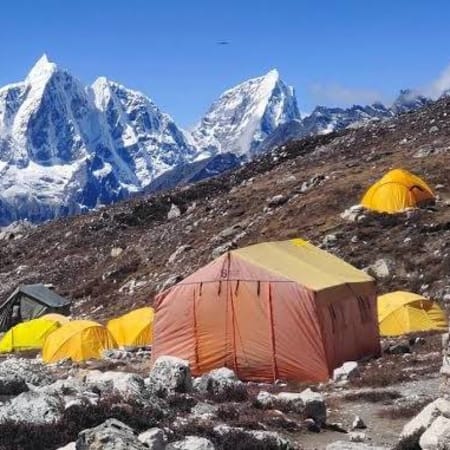
- Base Camp tented camp: high-quality camping setups, including foam mattresses and dining tents while at Island Peak Base Camp.
- Full board meals: 3 freshly prepared meals a day (breakfast, lunch, dinner), along with tea or coffee during your trek and climb.
- Staff, guides, and safety: licensed trekking guide and climbing Sherpa. Professional, English-speaking experts guide you on the trail and manage ropes on the peak.
- Porters: crew to carry your heavy main duffel bags, usually up to 15 kg per climber.
- Staff insurance: full coverage for medical and emergency rescue needs for all local staff.
- Medical equipment: first aid kits, pulse oximeters, and communal medical supplies.
- Gear and amenities.
- Group climbing gear: essential safety equipment including fixed ropes, ice screws, snow bars, and high-altitude cooking gear.
Not Included
- Travel and legal logistics: international airfare from your home country to Kathmandu and back.
- Nepal Tourist Visa: fee paid on arrival at the airport ($50 USD for a 30-day visa).
- Mandatory travel insurance: must specifically cover high-altitude mountaineering, medical treatment, and helicopter evacuation up to 6,000 meters.
- Personal equipment: personal climbing gear such as mountaineering boots, crampons, ice axes, climbing harnesses, ascenders (Jumar), and helmets. These can be rented cheaply in Kathmandu or Chhukung if you do not own them.
- Personal trekking clothing: thermal layers, hiking boots, gloves, and backpacks.
- Kathmandu expenses: city lunches and dinners while staying in Kathmandu.
- Extra nights: any accommodation costs if you arrive early or extend your stay past the 22-day itinerary.
- Trail luxuries and personal comforts: beverages such as bottled mineral water, soft drinks, specialty coffees, and alcohol.
- Teahouse amenities: hot showers, Wi-Fi access, and electronic device charging fees.
- Tips and gratuities: tips for your trekking guide, climbing Sherpa, and porters.
Itinerary
-
1Day 01
Arrival in Kathmandu (1,400m)
Arrival in Kathmandu (1,400m).
-
2Day 02
Kathmandu Sightseeing
Kathmandu sightseeing.
-
3Day 03
Fly to Lukla and Trek to Phakding
Fly to Lukla (2,860m) and trek to Phakding (2,600m) - 4 hours. Overnight at the hotel.
-
4Day 04
Trek to Namche Bazaar
Trek to Namche Bazaar (3,440m) - 6-7 hours.
-
5Day 05
Acclimatization in Namche Bazaar and Thame Village
Acclimatization in Namche Bazaar with a trek to Thame Village, then back to Namche.
-
6Day 06
Trek to Tengboche
Trek to Tengboche (3,867m) - 5 hours. Overnight.
-
7Day 07
Trek to Dingboche
Trek to Dingboche (4,200m) - 5 hours.
-
8Day 08
Acclimatization in Dingboche
Acclimatization in Dingboche.
-
9Day 09
Trek to Lobuche
Trek to Lobuche (4,930m) - 6 hours.
-
10Day 10
Trek to Everest Base Camp and Gorak Shep
Trek to Everest Base Camp (5,364m) and Gorak Shep (5,160m) - 7 hours.
-
11Day 11
Hike to Kala Patthar and Return to Lobuche
Hike to Kala Patthar (5,545m) and return to Lobuche - 7 hours.
-
12Day 12
Trek to Chhukung
Trek to Chhukung (4,970m) - 6-7 hours.
-
13Day 13
Trek to Island Peak Base Camp
Trek to Island Peak Base Camp (5,200m) - 4 hours.
-
14Day 14
Ascend to High Camp
Ascend to High Camp (5,600m) - 4 hours.
-
15Day 15
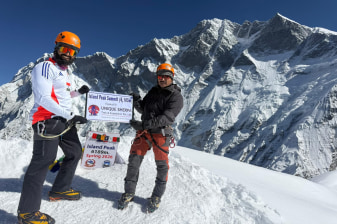
Summit Island Peak and Return to Base Camp
Summit Island Peak (6,160m) and return to Base Camp - 7-8 hours.
-
16Day 16
Trek Back to Dingboche
Trek back to Dingboche (4,310m) - 4-5 hours.
-
17Day 17
Trek to Phortse Village
Trek to Phortse Village (3,985m) - 6-7 hours.
-
18Day 18
Trek to Khumjung
Trek to Khumjung (3,790m) - 4-5 hours.
-
19Day 19
Trek Back to Phakding
Trek back to Phakding (2,600m) - 6 hours.
-
20Day 20
Trek to Lukla
Trek to Lukla (2,800m) - 5 hours.
-
21Day 21
Fly to Kathmandu
Fly to Kathmandu and transfer to the hotel.
-
22Day 22
Departure from Nepal
Departure from Nepal.
Meeting Point
Meeting point: Kathmandu · Tour start: Kathmandu Airport — Tour ends at the same location as the start point.