
10-Day Spiritual Tour of Maharashtra from Mumbai with Ajanta and Ellora
About This Tour
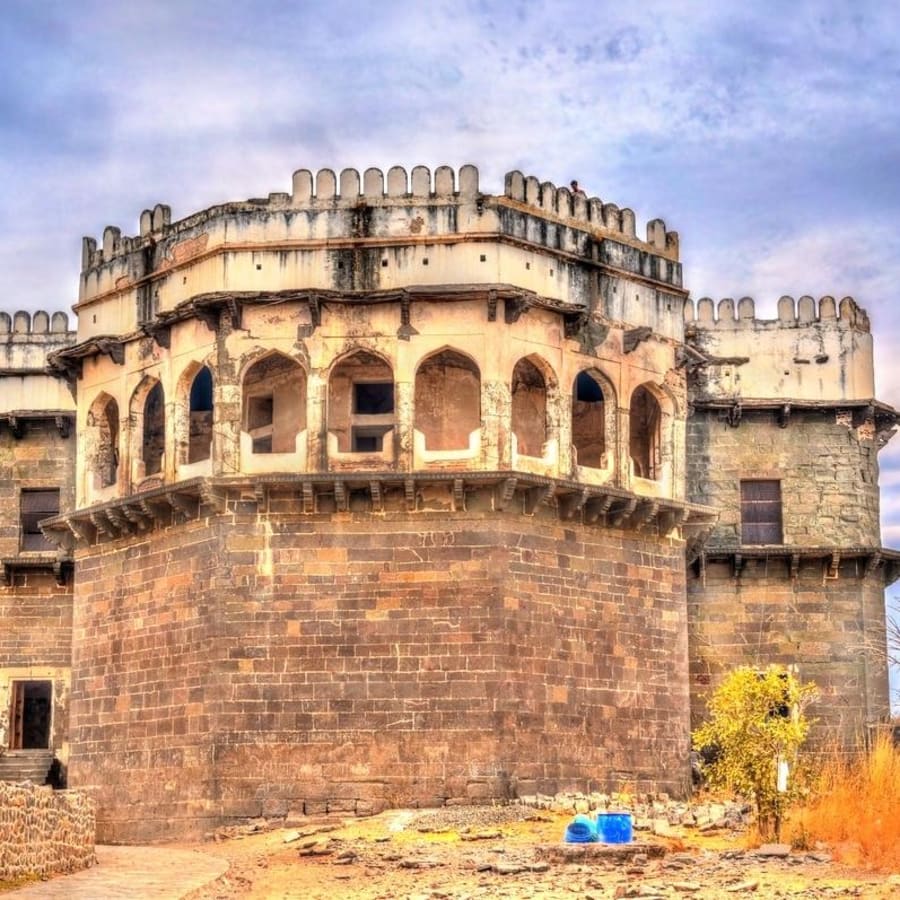
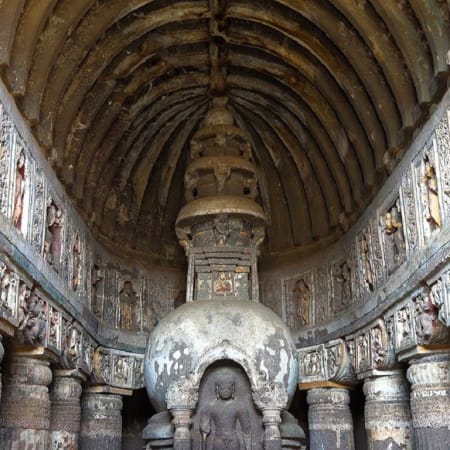
Explore Maharashtra, India's third-largest and second-most populous state, on this 10-day tour. The state is brimming with colourful shrines, a remarkable colle...
Duration: 10 Days · Tour type: Private · Activity level: Moderate · Accommodation: Included · Standard · Transport: Included · Wheelchair access: Not applicable · Cities: Mumbai, Pune, Nasik, Aurangabad, Ahmadnagar, Lonavala · Languages: English
About Ahmadnagar

Ahmadnagar
Explore the list of top ranked local tour guides in Ahmadnagar. Get tour activities offered by tour companies and independent travel guides in Ahmadnagar.
What's Included
- Accommodation on a twin-sharing basis in selected category hotels as per the bed and breakfast itinerary
- Transfers and sightseeing as per the itinerary by private AC vehicle
- English-speaking Indian tour guide
- For groups of 6 or more travellers, an accompanying tour escort for the whole tour will be provided
- Entrance fees to monuments and activities as mentioned in the itinerary
- Shared ferry ride to Elephanta Caves
- Local assistance
- Two bottles of water per person per day
- Local taxes, parking, tolls, and driver expenses
- Travel kit (travel documents, mask, hand sanitiser)
Not Included
- International flights and visas
- Travel insurance
- Tips and personal expenses
- Additional visits or extra use of vehicles
- Anything not mentioned in the inclusions
Itinerary
-
1Day 01
Arrival in Mumbai and Elephanta Island
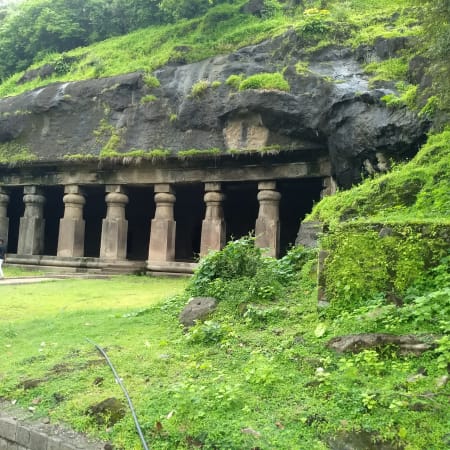
On arrival in Mumbai, meet our representative and transfer to the hotel. In the afternoon, visit Elephanta Island, famous for the caves dedicated to the sacred sculptures of the Hindu gods. Transfer back to Mumbai and take a panoramic tour of colonial Mumbai, passing through Victoria Terminus station and the Fort area. Later, visit Gandhi's House (Mani Bhavan), which was the focal point of Gandhi's political activities in Mumbai between 1917 and 1934. The day ends with a visit to Hanging Gardens. Overnight in Mumbai.
-
2Day 02
Kanheri Caves and Global Vipassana Centre
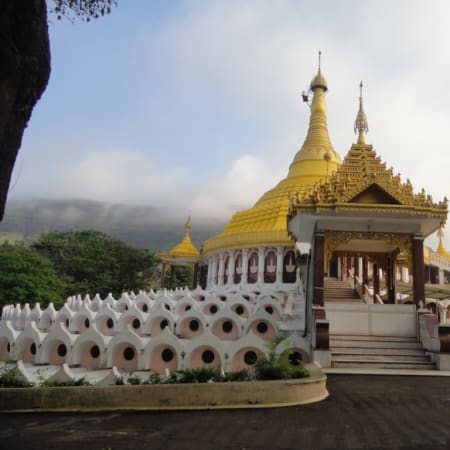
After breakfast in the morning, explore Kanheri Caves to see Buddhist sculptures, relief carvings, paintings, and inscriptions dating from the 1st century BC to the 10th century CE. Kanheri comes from the Sanskrit Krishnagiri, which means black mountain. The site is on a hillside and is accessed via rock-cut steps. After that, visit the Global Vipassana Centre. The Global Vipassana Pagoda is a meditation hall near Gorai in north-west Mumbai, India. The pagoda was inaugurated by Pratibha Patil, then President of India, on 8 February 2009. It is built on donated land on a peninsula between Gorai Creek and the Arabian Sea. The pagoda serves as a monument of peace and harmony, and its centre contains the world's largest stone dome built without any supporting pillars. Return to the hotel for an overnight stay.
-
3Day 03
Mumbai to Pune via Lonavala Caves
After breakfast, proceed to Pune. Stop at Lonavala and visit the Bhaja Caves. They are over 2000 years old and date back to 160 BC. The Bhaja Caves are 22 impressive and magnificent rock-cut caves. It is said that Buddhist monks used to live here and provided shelter to travellers who were on a trade excursion. The rock excavation of the caves is intricate and very fine, and looks marvellous. Various figures, such as a woman dancing and playing the tabla, are also excavated inside the caves, revealing much about the history and lifestyle of the people of the 1st century. Then, explore Karla Caves. These ancient Buddhist rock-cut caves are a famous tourist attraction located near Lonavala. Also known as Karli Caves, Karle Caves, or Karla Cells, they are among the oldest Buddhist cave shrines in India. These caves house one of the largest Chaityas, a prayer hall with a stupa, in India. Karla Caves are mainly known for the Ekvira Temple located inside. Continue the journey and arrive in Pune. Overnight stay in Pune.
-
4Day 04
Historic and Sacred Sites of Pune
Have breakfast in the hotel, then visit Shaniwarwada. It was the stately mansion originally built as the residence of the Peshwas. The foundation was laid by Bajirao I in 1730 AD, and construction was completed in 1732 AD. Several additions were later made to the palace, including fortification walls with bastions, gates, and court halls by his successors. Explore the Aga Khan Palace, also known as the Gandhi National Museum, an important site in the Indian freedom struggle. It served as a prison for national leaders like Mahatma Gandhi during the Quit India Movement in 1942. The Aga Khan Palace was donated to India by Aga Khan IV in 1969. The museum also serves as a memorial where the remains (samadhi) of Mahatma Gandhi's wife, Kasturba Gandhi, rest in peace. The palace was built in 1892 by Sultan Mohammed Shah, Aga Khan III. When taking a trip to Pune, the Aga Khan Palace is a must-visit for its historical and architectural significance. Marvel at the Pataleshwar Cave Temple. It is devoted to Lord Pataleshwar, the God of the Underworld. Built in the 8th century, this temple is visited by religious travellers who admire its architectural beauty. It is said that the Pataleshwar Cave Temple has been carved out of a single rock. It is also dedicated to Lord Shiva and Nandi. There are statues of Hindu gods and goddesses such as Goddess Sita, Goddess Lakshmi, Lord Ram, Lord Lakshman, and Lord Ganesh. A majestic Shiva lingam stands under its roof at the main shrine of the temple. This temple also has huge pillars, adding to its magnificence. Overnight stay in Pune.
-
5Day 05
Pune to Aurangabad via Shani Shingnapur
After breakfast, take an optional visit to the Osho Ashram. Osho Ashram was founded by Rajneesh Chandra Mohan Jain, who is popularly known as Osho Rajneesh. Also known as Osho Commune International of Pune, this ashram is spread across 32 acres. Later, transfer to Aurangabad. You may also visit Shani Shingnapur on the way, a famous temple dedicated to Shani. It is acclaimed as the "Alive Temple Town" in Maharashtra because of the belief that Lord Shani still resides in the self-emanated rock that represents him. An interesting fact about this town is that its amenities do not have doors. It is believed that Lord Shani himself protects the vicinity of Shani Shingnapur, and no one dares to commit theft at this place. Arrive in Aurangabad and check in at the hotel for an overnight stay.
-
6Day 06
Ellora Caves and Daulatabad Fort
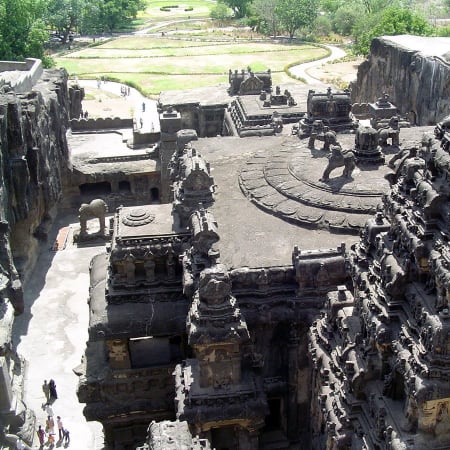
After breakfast at the hotel, explore the Ellora Caves. The caves are over 2000 years old and consist of temples and monasteries made from rock by Buddhist, Hindu, and Jain monks and artisans. Ellora is a World Heritage Site and represents the epitome of Indian rock-cut architecture. The 34 "caves" are structures excavated out of the vertical face of the Charanandri Hills. The 12 Buddhist caves (1-12), 17 Hindu caves (13-29), and 5 Jain caves (30-34), built in proximity, demonstrate the religious harmony prevalent during this period of Indian history. It is a protected monument under the Archaeological Survey of India. Then, visit Daulatabad Fort. It towers over a conical hill 200 meters high. Daulatabad, or "the abode of wealth," dates back to 1327, when Muhammad-bin-Tughluq made it his capital. Overnight stay in Aurangabad hotel.
-
7Day 07
Ajanta Caves Excursion
After an early-morning breakfast, proceed to Ajanta Caves. They are cut from the volcanic lavas of the Deccan Trap in a steep crescent-shaped hillside in a forested ravine of the Sahyadri Hills. These caves are older than those at Ellora and consist of 24 monasteries and temples hewn out of solid rock. The wall paintings and frescoes of these caves are a wealth of colours. Overnight stay in Aurangabad.
-
8Day 08
Aurangabad to Nashik Sacred Sites and Winery
After breakfast at the hotel, transfer to Nashik. Arrive in Nashik and visit Sita Gufa. It was the spot from where Sita was kidnapped by Ravana. A narrow staircase leads to the caves. The caves house idols of Lord Ram, Sita, and Lakshman, as well as a Shivling said to be the one Sita worshipped. Later, visit Trimbakeswar Temple, one of the most sacred temples in India, as it houses one of the twelve most important shrines of Shiva. Although entry is only allowed to Hindus, it is possible to have a look at the courtyard. Go to Sula Vineyards, said to be the first winery in the city. Most of the famous companies have their factories set up in this place. The unparalleled experience of viewing the process of making wine will make you fall in love with this place. Sula is the name derived from the owner's mother's name, "Sulabha." If you visit this place, you will gain knowledge about the history behind the formation of this winery. Overnight in Nashik.
-
9Day 09
Nashik to Mumbai via Igatpuri
Transfer to Mumbai. On the way, you may visit the Dhamma Giri Vipassana Centre at Igatpuri. Dhamma Giri, meaning "Hill of Dhamma," is one of the world's largest Vipassana meditation centres. It is co-located with the Vipassana Research Institute at Igatpuri. Overnight stay in Mumbai.
-
10Day 10
Departure from Mumbai
Have breakfast at the hotel and transfer to the airport to end the trip.
Meeting Point
Meeting point: Terminal 1, Navpada, Chhatrapati Shivaji International Airport Area, Vile Parle, Mumbai, Maharashtra, India · Tour start: Mumbai, Maharashtra, India — Tour ends at the same location as the start point.


